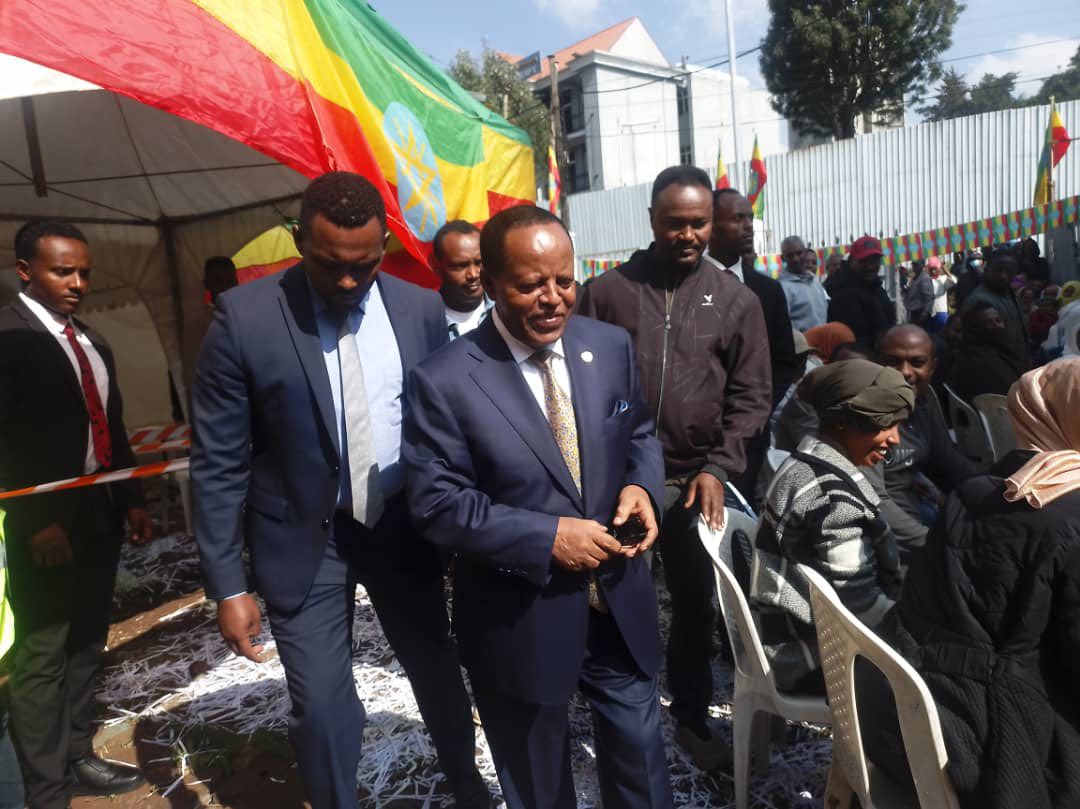
GONDAR, ETHIOPIA — Ethiopian President Taye Atske Selassie has described the country’s seventh general election as an important milestone in Ethiopia’s democratic journey, pointing to record voter registration, broad political participation, and strong public engagement as signs of progress.
Speaking after casting his ballot in Gondar on Monday, the president said the scale of participation made the election exceptional by any measure.
“If you look at the number of turnout, 54 million people getting registered and very much excited to vote for their leaders, isn’t it exceptional?” he said.
The election is one of the largest democratic exercises in Ethiopia’s history, with millions of voters registered across the country and dozens of political parties competing for seats.
Record participation
President Taye said the election stands apart from previous polls in several important ways.
“This is the seventh time that we are conducting an election. When I compare it to the ones we had in the past, this one is different in a couple of aspects,” he said.
“The first one is the number of registered voters. It is indeed huge.”
He also highlighted the breadth of political competition, noting that more than 40 political parties and a significant number of independent candidates are participating in the vote.
“To the best of my recollection, there are 42 parties competing. That is significant. The number of independent candidates is also significant,” he said.
Building democratic institutions
The president described the election as part of Ethiopia’s long-term effort to strengthen democratic institutions and political stability.
“This is one of the steps towards building a very stable and strong Ethiopia,” he said.
While acknowledging that Ethiopia’s democratic system continues to evolve, Taye argued that progress should be measured against the country’s own trajectory rather than external comparisons.
“I know we might not fulfill the standards of some Western countries, but it is one of the steps in the right direction,” he said.
The remarks come as domestic and international observers monitor the electoral process, with turnout, transparency, and inclusivity expected to shape assessments of the vote.
“The ballot is stronger than the bullet”
Addressing critics of the process, President Taye said political competition should be resolved through democratic participation rather than confrontation.
“There are so many detractors out there. There is nothing new about it. It has been the case all over the world,” he said.
“But indeed, this is a day that we show the world that the ballot is stronger than the bullet.”
Calling the day “very special,” the president said his vote reflected both personal and national responsibility.
“I am voting for my community, voting for myself, and voting for my country,” he said.
His comments underscored a central message emerging from election day: that political differences should be settled through the ballot box as Ethiopia continues its effort to strengthen democratic governance.