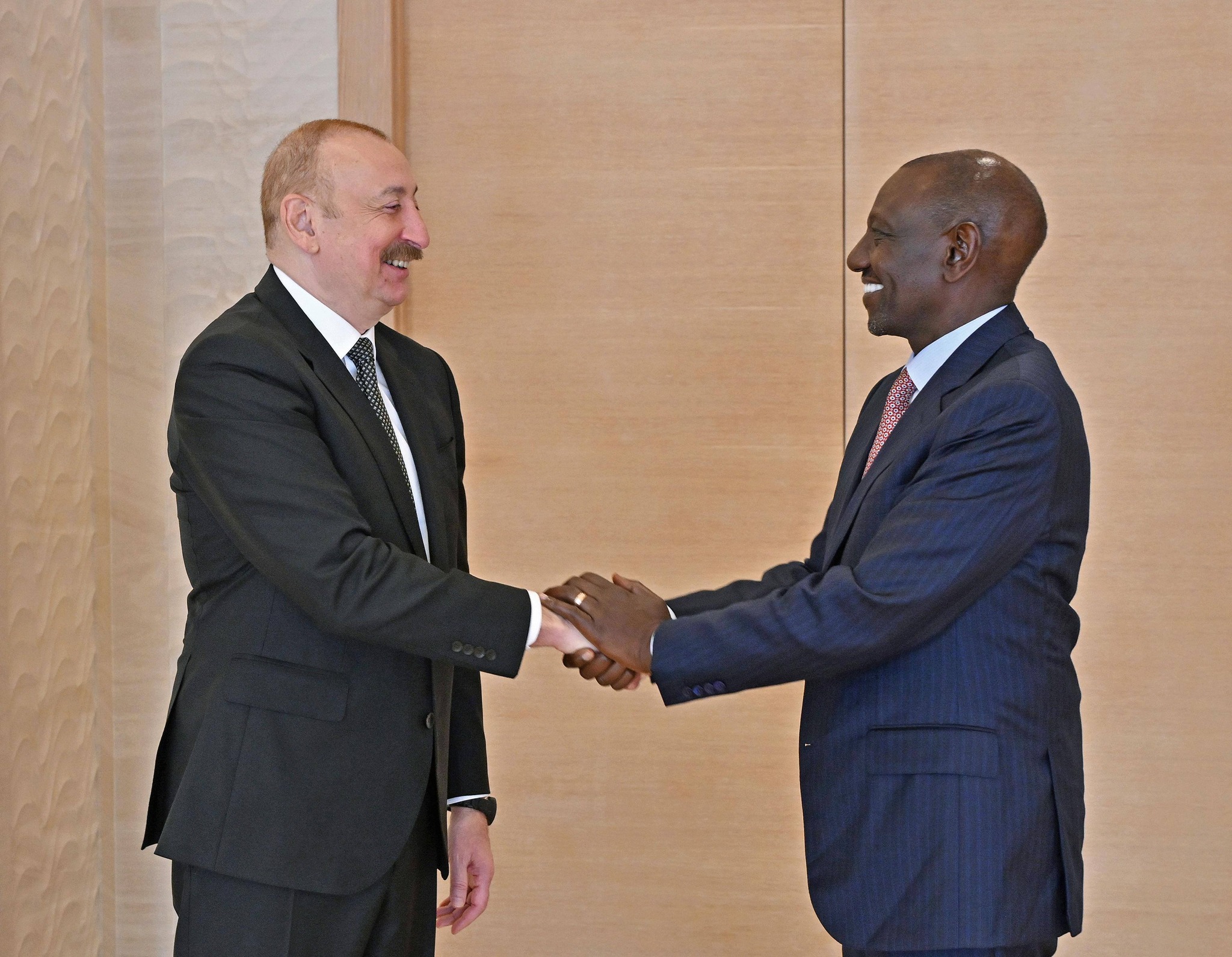
Kenya and Azerbaijan are seeking to deepen economic and strategic cooperation through new partnerships in energy, infrastructure, and trade, reflecting Nairobi’s broader effort to position itself as a regional investment and logistics hub in East Africa.
Kenyan President William Ruto held talks with Azerbaijani President Ilham Aliyev at the Baku Olympic Stadium on the sidelines of the World Urban Forum, where both leaders discussed expanding bilateral cooperation in key strategic sectors.
According to the Kenyan presidency, discussions centered on collaboration in oil and gas, renewable energy development, affordable housing investment, and regional refining infrastructure. The talks also explored Azerbaijan’s potential participation in a proposed oil refinery project intended to serve the wider East African market.
The engagement highlights Kenya’s growing focus on energy diversification and industrial expansion as the government seeks to meet its target of generating 10,000 megawatts of electricity while simultaneously reducing infrastructure deficits and expanding manufacturing capacity.
For Azerbaijan, the discussions represent an opportunity to extend its economic footprint into East Africa beyond its traditional Eurasian sphere of influence. As an energy-producing state with growing investment ambitions abroad, Baku has increasingly sought partnerships across Africa in sectors tied to energy infrastructure, logistics, and trade connectivity.
Trade diplomacy also featured prominently in the talks. Kenya is seeking expanded access for tea, horticulture, and agricultural exports, sectors that remain critical sources of foreign exchange earnings for Nairobi.
The meeting reflects a wider geopolitical trend in which African states are broadening their external partnerships amid shifting global economic alignments. Rather than relying solely on Western, Chinese, or Gulf financing, countries like Kenya are increasingly engaging mid-sized powers such as Azerbaijan to diversify investment sources and strategic cooperation.
While no major agreements were announced, the discussions signal a gradual deepening of ties that both governments appear eager to translate into longer-term economic and infrastructure partnerships.