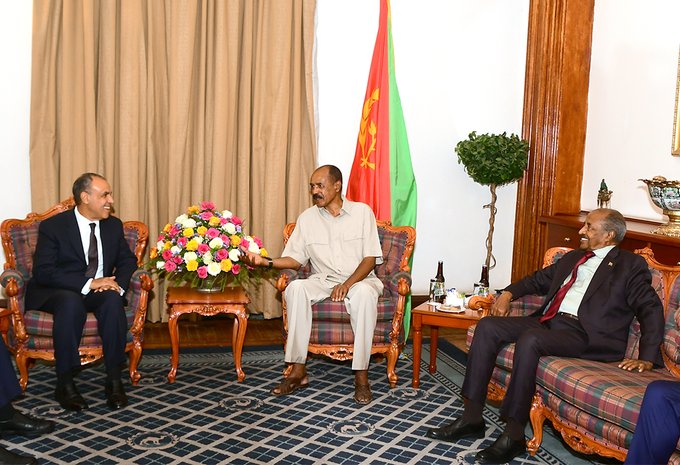
ERITREA, EGYPT — Eritrea and Egypt are intensifying their strategic partnership through a new wave of economic and maritime agreements, underscoring the growing geopolitical importance of Red Sea alliances and regional connectivity in the Horn of Africa.
According to Eritrean Information Minister Yemane Gebremeskel, President Isaias Afwerki hosted a senior Egyptian delegation in Asmara on Sunday for what officials described as “extensive discussions” on bilateral cooperation and regional affairs.
The Egyptian delegation included Foreign Minister Badr Abdelatty, Transport Minister Lt. Gen. Kamel Alwazir, and executives from companies operating in transport, mining, and energy sectors — a composition that signals Cairo’s expanding economic and strategic interests along the Red Sea corridor.
The talks culminated in the signing of a marine transport agreement aimed at strengthening cooperation in international shipping and maritime connectivity. Eritrean and Egyptian officials framed the deal as part of a broader effort to institutionalize economic integration while advancing principles of freedom of navigation in one of the world’s most contested maritime regions.
President Isaias emphasized the importance of consolidating “all-rounded ties” between the two countries, while expressing Eritrea’s readiness to implement joint projects with Egyptian companies. Egyptian Foreign Minister Abdelatty described the visit as a reflection of the “brotherly ties of friendship and cooperation” between the two states and said Cairo was seeking to deepen economic and trade relations under the guidance of President Isaias and Abdel Fattah el-Sisi.
The timing of the visit is significant. Egypt has been steadily expanding its diplomatic and security engagement across the Horn of Africa as regional competition intensifies around maritime routes, ports, energy corridors, and political alignments linked to the Red Sea and Nile Basin. Eritrea, meanwhile, continues to position itself as a critical geopolitical actor despite its relative isolation from many Western-led regional initiatives.
The maritime agreement also reflects broader strategic calculations beyond trade. Control over shipping routes and logistical infrastructure has become increasingly intertwined with regional security politics, especially as global powers and Gulf states compete for influence across the Red Sea arena.
For Cairo, closer coordination with Eritrea strengthens its regional network at a time of continuing tensions over the Grand Ethiopian Renaissance Dam and wider Horn of Africa security dynamics. For Asmara, deeper engagement with Egypt provides both economic opportunities and strategic leverage in a rapidly evolving regional order.
The visit therefore signals more than routine bilateral diplomacy. It points to the gradual consolidation of a Red Sea political axis shaped by infrastructure cooperation, maritime security interests, and shared regional calculations.