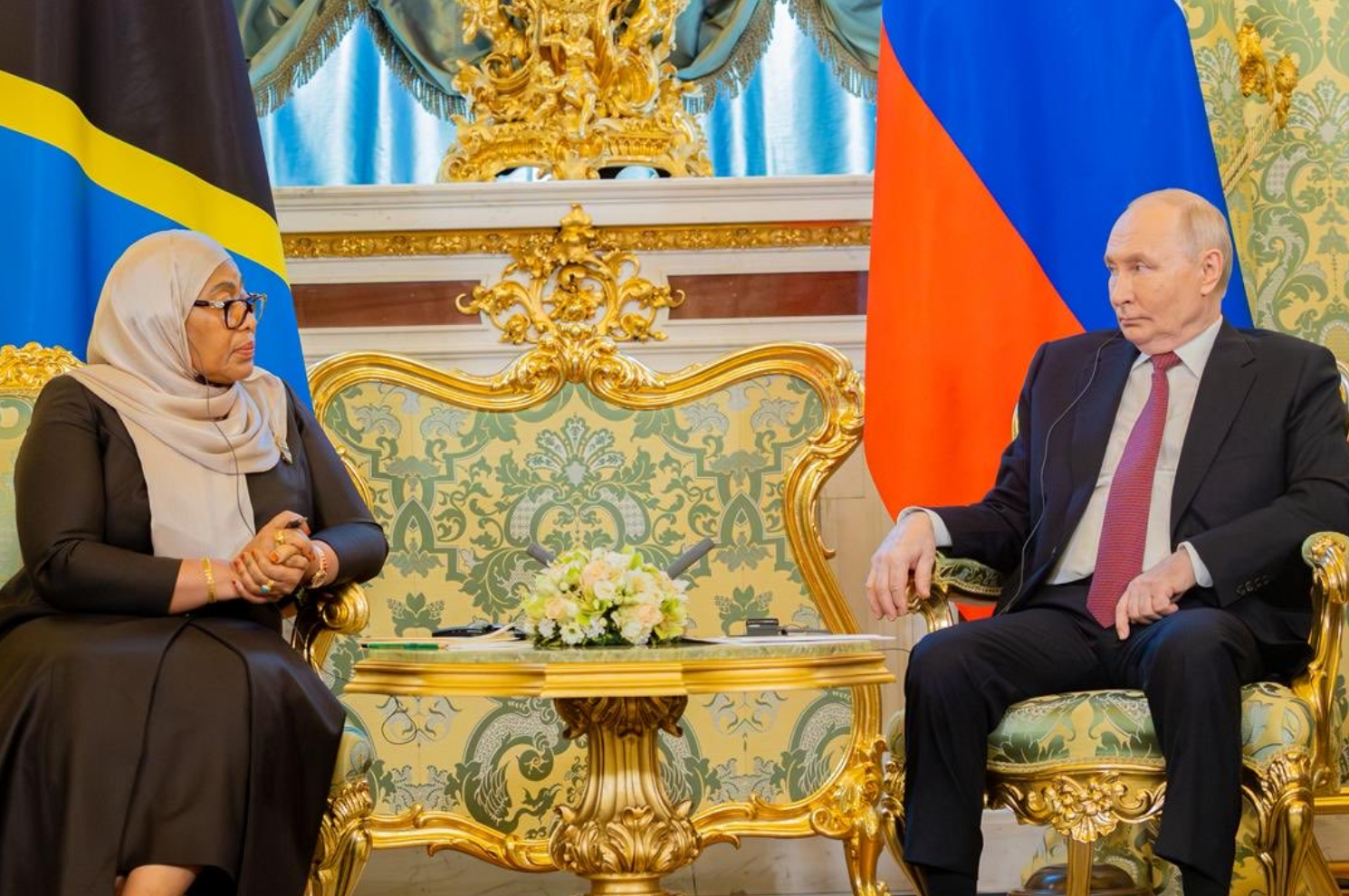
 DAR ES SALAAM, TANZANIA — President Samia Suluhu Hassan’s visit to Russia marks a significant step in Tanzania’s strategy to broaden its international partnerships as the country pursues an ambitious agenda focused on industrialization, agricultural modernization, energy development, and economic transformation.
The visit comes as Tanzania seeks to strengthen economic cooperation with a wider range of global partners while advancing long-term development priorities under its national growth agenda.
Government officials view the engagement as an opportunity to deepen cooperation in sectors considered critical to Tanzania’s economic future, including infrastructure, agriculture, energy, technology, and skills development.
Development Agenda Takes Center Stage
President Samia’s trip reflects Tanzania’s growing focus on leveraging international partnerships to support domestic development goals.
As one of East Africa’s fastest-growing economies, Tanzania is seeking new avenues for investment and technology transfer to support industrial expansion and create employment opportunities for its rapidly growing population.
The government has consistently identified industrialization as a central pillar of its economic strategy, alongside efforts to modernize agriculture, improve energy access, and strengthen human capital development.
The visit to Russia aligns with these objectives by creating opportunities for dialogue on investment, trade, and technical cooperation.
Building on Longstanding Relations
Tanzania and Russia share decades of diplomatic relations, with cooperation spanning education, trade, culture, and technical assistance.
The latest engagement signals a renewed effort to expand that relationship into areas more directly linked to economic growth and industrial development.
Tanzanian officials have increasingly emphasized the importance of diversifying international partnerships as the country seeks to reduce vulnerabilities associated with overreliance on a limited number of economic partners.
The visit also reflects a broader trend across Africa, where governments are pursuing more diversified foreign policy and economic engagement strategies in response to changing global economic dynamics.
Opportunities in Trade and Investment
Among the key expectations surrounding the visit is the prospect of increased investment and expanded commercial cooperation.
Tanzania is seeking greater access to international markets for agricultural products while attracting investment into manufacturing, energy, infrastructure, and value-added industries.
Officials believe stronger economic ties could help accelerate ongoing efforts to move the economy further up the value chain, reducing dependence on raw commodity exports and promoting domestic industrial capacity.
For Russia, the engagement offers an opportunity to expand its economic footprint in East Africa through cooperation with one of the region’s largest and most strategically positioned economies.
A Broader Shift in Economic Diplomacy
President Samia’s visit highlights the increasing role of economic diplomacy in Tanzania’s foreign policy.
Rather than focusing solely on political relations, the government is placing greater emphasis on partnerships that can deliver tangible development outcomes, including investment, technology, skills transfer, and job creation.
The approach reflects a wider shift among African economies seeking to engage a broader range of international partners to support national development priorities.
As the visit concludes, attention will turn to the agreements, commitments, and follow-up initiatives that emerge from the discussions.
For Tanzania, the significance of the trip lies not only in strengthening bilateral relations with Russia but also in advancing a broader strategy aimed at accelerating economic transformation through diversified global partnerships.
The success of that strategy will ultimately be measured by its ability to translate diplomatic engagement into concrete investments, expanded trade opportunities, and sustainable economic growth at home.