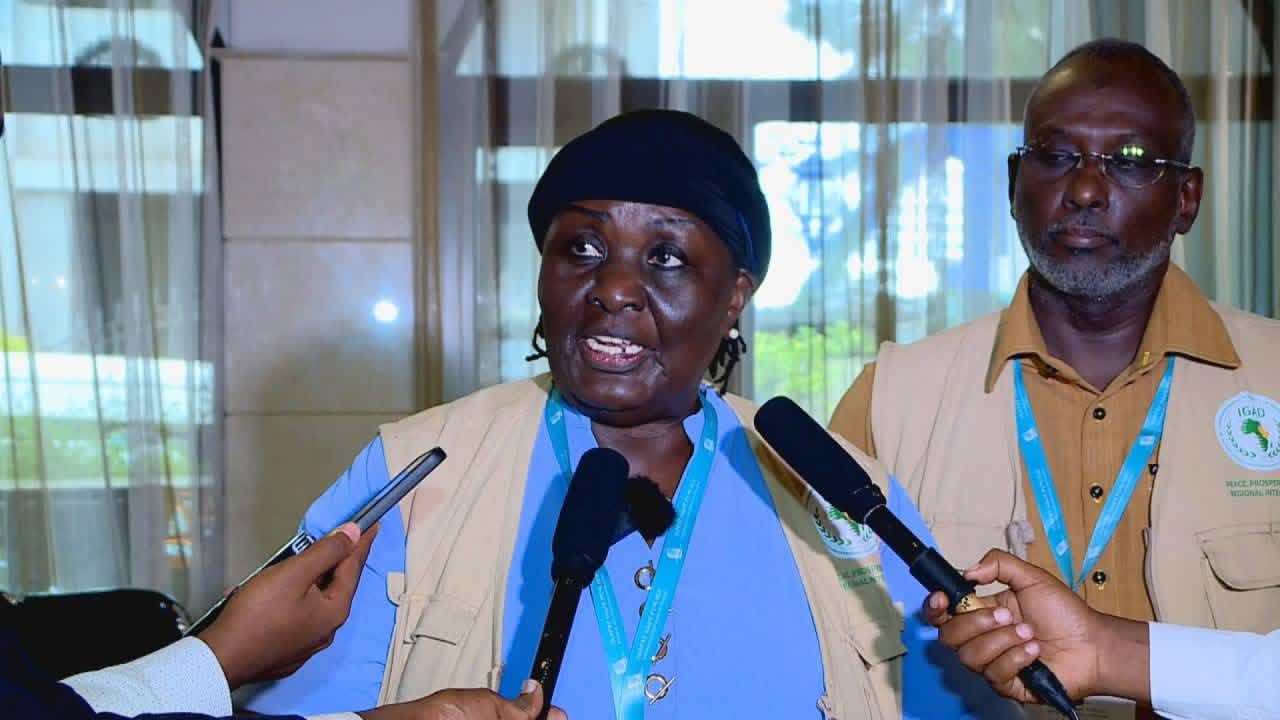
ADDIS ABABA, ETHIOPIA — Ethiopia’s seventh national election is receiving a positive preliminary assessment from regional observers, with the Intergovernmental Authority on Development (IGAD) describing the process as a practical demonstration of democratic participation in action.
The IGAD Election Observation Mission says its field observations point to broad civic engagement and structured electoral administration across polling stations visited since voting began.
“The election demonstrated a true democratic exercise,” says head of mission Speciosa Wandira, who previously served as Vice President of Uganda.
Engagement with institutions and stakeholders
Wandira says the mission’s assessment is based on extensive engagement with national institutions and civic actors since arriving in Ethiopia.
The delegation holds discussions with the National Electoral Board of Ethiopia (NEBE), civil society organizations, human rights groups, and youth and women’s associations as part of its observation framework.
According to the mission, civil society organizations play an active role throughout the electoral process, particularly in voter education and polling station observation.
Wandira says these consultations form part of IGAD’s effort to evaluate not only election-day procedures but also the broader participatory environment in which the vote takes place.
Observations from polling stations
From the opening of polling stations, IGAD observers report what they describe as visible participation from diverse segments of society.
“We observed mothers, youth, women, and persons with disabilities participating actively and in a manner that fully respected the electoral laws,” Wandira says.
The mission notes that polling stations visited appear organized, with voters able to access voting materials and complete the process within established procedures.
Observers also highlight the presence of election officials and security personnel at voting centres, which the mission describes as contributing to orderly conduct.
Inclusive participation highlighted
The IGAD mission places particular emphasis on the inclusiveness of voter participation across demographic groups.
According to its preliminary observations, women, young voters and persons with disabilities are present in noticeable numbers at polling stations visited by the delegation.
Wandira says this level of participation reflects a broader commitment to civic engagement across communities.
She describes the environment as one in which eligible voters are able to exercise their rights within the framework of electoral regulations.
A regional benchmark for electoral practice
Beyond Ethiopia’s domestic context, IGAD frames its observations within a wider regional perspective.
Wandira says the electoral process reflects a model of participation that aligns with democratic practice as envisioned across member states.
She concludes that what the mission observes is consistent with the type of electoral exercise regional institutions seek to encourage across the continent.
“The overall process reflects the exact kind of democratic exercise we wish to see across Africa,” she says.
Ongoing observation and final assessment
The mission stresses that its current remarks represent a preliminary assessment based on field visits and stakeholder consultations conducted during the voting period.
A comprehensive report, including further analysis of electoral procedures, will be released following the completion of data collection from across the country.
As Ethiopia moves into the vote-counting phase, IGAD observers say their final conclusions will depend on the consolidation of findings from all monitored regions and polling stations.
For now, the mission’s initial statement adds a supportive regional perspective to an election that continues to draw varied interpretations from domestic actors, opposition parties and international observers.