ABU DHABI – When the United Arab Emirates announced a $1bn artificial intelligence initiative for Africa, the headline figure drew attention. But the deeper story lies in what the money is actually designed to do.
Abu Dhabi is not funding apps. It is not running pilots. It is committing to embed artificial intelligence into the machinery of African states, from customs desks to hospital systems to agricultural forecasting, as a long-term development partner invested in outcomes that last well beyond any single project cycle.
The initiative arrives at a moment of real opportunity for the continent. African governments are under growing pressure to deliver public services faster, more efficiently and at greater scale. Technology, deployed with genuine commitment and proper integration, offers one of the most powerful paths to meeting that pressure. The UAE has decided that helping Africa walk that path is both a development priority and a partnership worth building for generations.
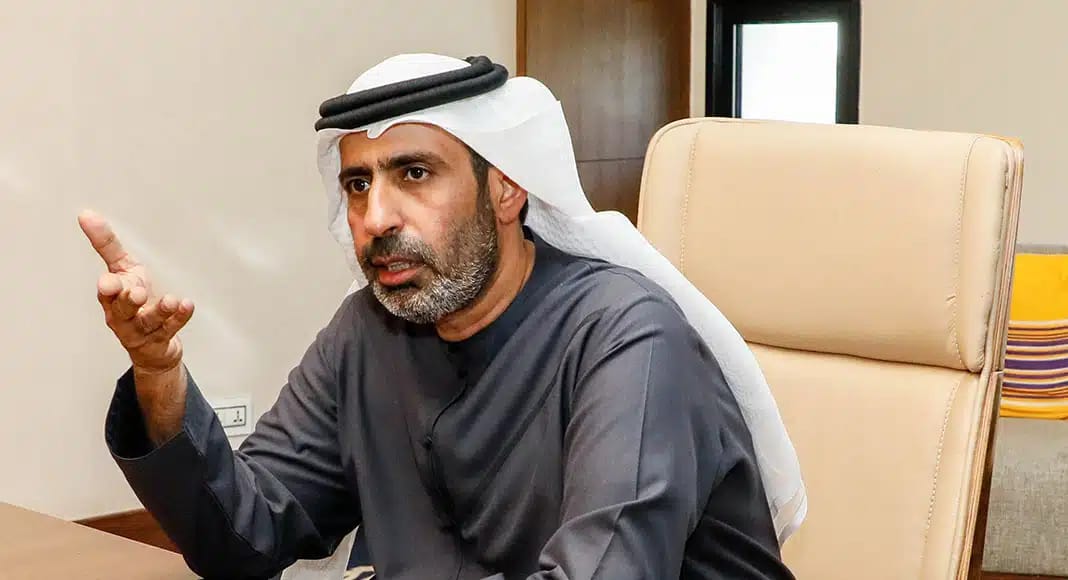
“The UAE’s approach reflects a firm belief that AI can serve as a transformative tool for accelerating inclusive growth and strengthening long-term development outcomes in Africa,” says Sultan Mohammed Al Shamsi, Assistant Minister of Foreign Affairs for Development and International Organizations and Vice Chairman of the UAE Aid Agency, in an interview with AfricaTells.
The programme is designed with that conviction at its centre. “It targets strategic sectors where public authorities play a leading role and where AI applications can generate clear social and economic value, including government operations, healthcare systems, education, food systems, and climate resilience efforts,” Al Shamsi says.
Rather than funding experimental pilots, Abu Dhabi is making a generational commitment: that artificial intelligence should become infrastructure, not novelty, and that African states should own and drive that infrastructure themselves.
From Ports to Platforms
The UAE’s engagement with Africa did not begin with artificial intelligence. Over the past decade, Abu Dhabi has become one of the continent’s most committed external partners, building a presence through sovereign wealth funds, state-linked conglomerates and private capital that now reaches across North Africa, the Horn, West and Southern Africa.
The foundation has always been physical and productive. Ports, aviation corridors, energy assets and agricultural supply chains have connected African economies to global markets and to each other. That foundation has created real value and it continues to grow.
“The UAE has established a large and expanding investment footprint across Africa, making it one of the continent’s leading foreign investors in recent years,” Al Shamsi says. “Its presence spans North, East, West, and Southern Africa, driven by a mix of sovereign wealth funds, state-linked firms, and private investors.”
Infrastructure and logistics came first. Energy followed, including renewables alongside conventional power. Agriculture and food security investments have worked to stabilise supply chains. Financial services, tourism and aviation have deepened connectivity at every level.
The partnership is now evolving into its next chapter. “Digital infrastructure, including AI and technology, are increasingly important, reflecting the UAE’s strategy to support economic diversification and long-term development across Africa,” Al Shamsi says.
The move from physical connectivity to digital state-building reflects how seriously Abu Dhabi takes Africa’s development trajectory. The continent’s governments are not looking for dependency. They are looking for partners who bring capital, expertise and a genuine commitment to building something that endures. That is precisely what the UAE is bringing to this programme.
Building States That Work
At the heart of the initiative is a conviction that has shaped every design decision: artificial intelligence should strengthen African governments from within, not operate around them.
Al Shamsi is clear about what that means. “Every AI project must be linked to clear, measurable outcomes such as faster processing times, cost reductions, or improved accuracy in public services,” he says. “AI initiatives should only scale if they demonstrate tangible improvements that citizens and businesses can directly experience.”
That standard reflects an approach grounded in accountability and results. Integration into existing government systems is built into the programme from the start. “AI must be embedded into existing government workflows rather than operating as standalone tools. That means integrating AI outputs directly into decision-making systems, with clear rules for human oversight,” Al Shamsi explains.
People sit at the centre of the design. “Building human capacity is as important as investing in technology. Training civil servants and leaders to understand, supervise, and trust AI systems ensures these tools are used effectively and responsibly,” he says. The programme invests in the people who will run these systems, maintain them and improve them long after the initial deployment is complete.

Data governance is the foundation on which everything rests. “The UAE will maximise the value of its high-quality government data through secure data-sharing frameworks, strong privacy protections, and standardised data systems,” Al Shamsi notes. Public trust, he argues, is what determines whether digital transformation takes root and scales. The UAE is committed to earning and protecting that trust at every stage.
Finance Designed to Last
Unlike conventional aid programmes, the UAE is bringing together finance, corporate ecosystems and diplomacy in a single coordinated effort built for sustainability. The Abu Dhabi Exports Office leads the initiative, aligning funding with technology deployment and managing partnerships designed to generate lasting value on both sides.
“ADEX serves as the lead entity overseeing the initiative, bringing together public and private sector efforts while ensuring coherence between funding mechanisms, technology rollout, and strategic partnerships,” Al Shamsi says.
Private firms deliver end-to-end solutions across health, education, agriculture, climate resilience and public administration. African governments, telecommunications providers and local enterprises are not passive recipients. They are active architects of how these solutions are adapted and expanded on the ground.
“African stakeholders, including government bodies, telecommunications providers, and community-focused enterprises, play an active role in adapting, deploying, and expanding these solutions, reinforcing local ownership, institutional capacity, and long-term skills development,” Al Shamsi says.
The $1bn is designed as a catalyst for something much larger. “The allocation is structured to leverage additional global investment, encouraging engagement from multilateral lenders, venture capital firms, project financiers, and sovereign impact investors,” he explains. By using blended finance, the programme moves AI investment out of donor logic and into sustainable frameworks built to grow independently over time.
What Success Looks Like
For Abu Dhabi, success has nothing to do with the number of systems deployed and everything to do with whether African governments make artificial intelligence a permanent and self-sustaining feature of how they serve their people.
“Success would be visible in practical outcomes,” Al Shamsi says. “African governments would be using AI-enabled systems supported by UAE finance and expertise to improve core services such as customs, healthcare delivery, agriculture forecasting, and urban management, with clear gains in efficiency, transparency, and service access.”
Sustainability is the measure that matters most. “Success would mean the emergence of self-sustaining AI ecosystems, not dependency. This includes locally trained talent, regional data centres, African AI startups scaled with UAE capital, and joint ventures that create jobs and exportable digital services,” he says.
The partnership is built on trust that runs in both directions. “UAE-Africa cooperation would be seen as a trusted, long-term development model, with strong data governance and ethical standards that protect sovereignty and public trust,” Al Shamsi says.
The vision reaches further still. “Success would be reflected in global influence, with the UAE and African partners jointly shaping norms on responsible AI, digital public infrastructure, and inclusive growth,” he says.
That ambition captures what makes this programme distinctive. Abu Dhabi is not arriving in Africa with a product to sell. It is arriving with a partnership to build, one whose success is measured not in contracts signed but in African governments that work better, African citizens who are served more effectively, and a model of development cooperation that the rest of the world looks to as a standard worth following.