ADDIS ABABA — When the International Air Transport Association released its full-year 2025 passenger figures, the global story was one of recovery turning into structural growth. Demand rose 5.3percent worldwide, international traffic climbed 7.1 percent, and passenger load factors reached a historic high of 83.6 percent.
But inside those global averages sits a different, sharper narrative for Africa. The continent remains aviation’s smallest market — with just 2.2 percent of global traffic — yet it is one of its fastest movers. African airlines recorded 7.8 percent growth in annual traffic in 2025, with December surging more than 10 percent, outperforming Europe and North America and nearly matching Asia’s post-pandemic momentum.
The question is no longer whether Africans want to fly. It is whether the system can keep up.
Africa Grows Faster, From a Smaller Base
Africa posted one of the strongest load factor improvements globally in 2025. Capacity rose 6.5 percent, while demand climbed faster — lifting Africa’s passenger load factor by 0.9 percentage points to 74.9 percent.
“This was the lowest load factor among regions but a record high for Africa and the strongest load factor increase of any region,” IATA said in its release.
In practical terms, African aircraft are fuller than ever before — even if they still trail Europe, Asia, and the Middle East in efficiency. Europe closed 2025 with an 84.8 percent load factor, while Asia-Pacific reached 84.2 percent. Africa’s 74.9 percent shows real growth but also persistent structural constraints.
The December figures underline the trend. African airlines saw traffic jump 10.3 percent year on year in the final month of 2025, compared with 7.6 percent in Europe and a contraction in North America. For a continent long described as under-connected, the acceleration reflects rising regional business travel, diaspora mobility, and a slow reopening of intra-African routes following the AfCFTA push.
Capacity Strain Hits Africa Harder
Globally, airlines are struggling with delayed aircraft deliveries, engine shortages, and maintenance bottlenecks. For Africa, those problems are magnified by older fleets, limited leasing options, and fragile airport infrastructure.
“People clearly wanted to travel more, but airlines were continually disappointed with unreliable delivery schedules for new aircraft and engines, maintenance capacity constraints, and resultant cost increases that are estimated to exceed $11 billion,” IATA Director General Willie Walsh said.
He added that airlines were forced to stretch existing fleets. “With load factors just shy of 84%, it’s clear that these measures were an effective band-aid, but we need a real solution.”
For African carriers, that band-aid is often thinner. Many depend on leased aircraft from global markets already under strain. When supply chains tighten, Africa is typically last in line for new deliveries, spare parts, and engine replacements — a structural disadvantage that compounds over time.
Decarbonisation Risks Widening Africa’s Gap
Beyond hardware, IATA points to climate transition as aviation’s next structural test. Walsh warned that governments must accelerate sustainable aviation fuel production if growth is to remain viable.
“Governments whose economies grow because of aviation and whose citizens thirst for connectivity need to provide the supportive fiscal policy framework to rapidly accelerate progress, particularly for the energy sector to grow Sustainable Aviation Fuel production,” he said.
For Africa, decarbonisation is both an opportunity and a risk. The continent has vast biofuel potential but little sustainable aviation fuel infrastructure. Without investment, African airlines may face higher compliance costs from global climate rules while lacking access to affordable green fuel — reinforcing existing inequalities between African hubs and better-funded Middle Eastern and European competitors.
Connectivity Versus Concentration
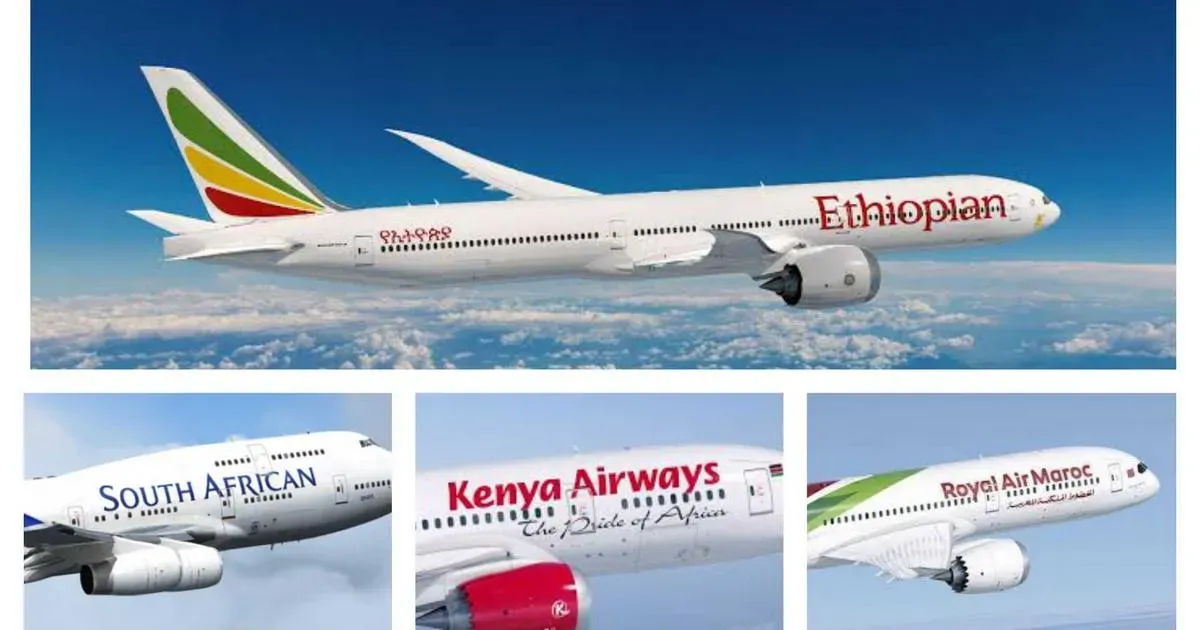
Africa’s aviation growth is not evenly distributed. Ethiopian Airlines, Royal Air Maroc, EgyptAir, and a few regional players dominate long-haul connectivity, while many smaller carriers struggle with financing, regulation, and market access.
Meanwhile, Africa’s share of global traffic remains stuck at 2.2 percent, compared with Asia-Pacific’s 34.5 percent and Europe’s 26.6 percent. Growth rates alone do not change structural power in aviation.
Still, momentum matters. Rising confidence in African routes from business travellers, tourists, and diaspora communities is real and measurable. The risk is that demand races ahead of institutional reform — and without faster liberalisation of airspace, stronger regional carriers, and infrastructure upgrades, Africa’s aviation boom could concentrate around a few hubs rather than spread across the continent.
Africa’s Aviation Test in 2026
Globally, IATA hopes 2026 will mark a rebound in aircraft supply. “It’s vital that 2025 proves to be the nadir of the supply chain crisis, and 2026 marks a rebound,” Walsh said.
For Africa, that rebound will determine whether growth translates into genuine connectivity or further congestion around a handful of dominant hubs. The continent is flying more than ever — but on systems built for a smaller, less ambitious market.
Africa’s aviation story in 2025 is no longer about recovery. It is about scale, sovereignty, and whether the fastest-growing region in passenger demand can finally claim a proportionate place in global air travel — rather than remain aviation’s smallest and most constrained frontier.