REO DE JANEIRO, BRAZIL – The global airline industry is entering another period of uncertainty, with rising fuel costs, persistent aircraft delivery failures, geopolitical tensions and slowing demand threatening to erode profitability across the sector.
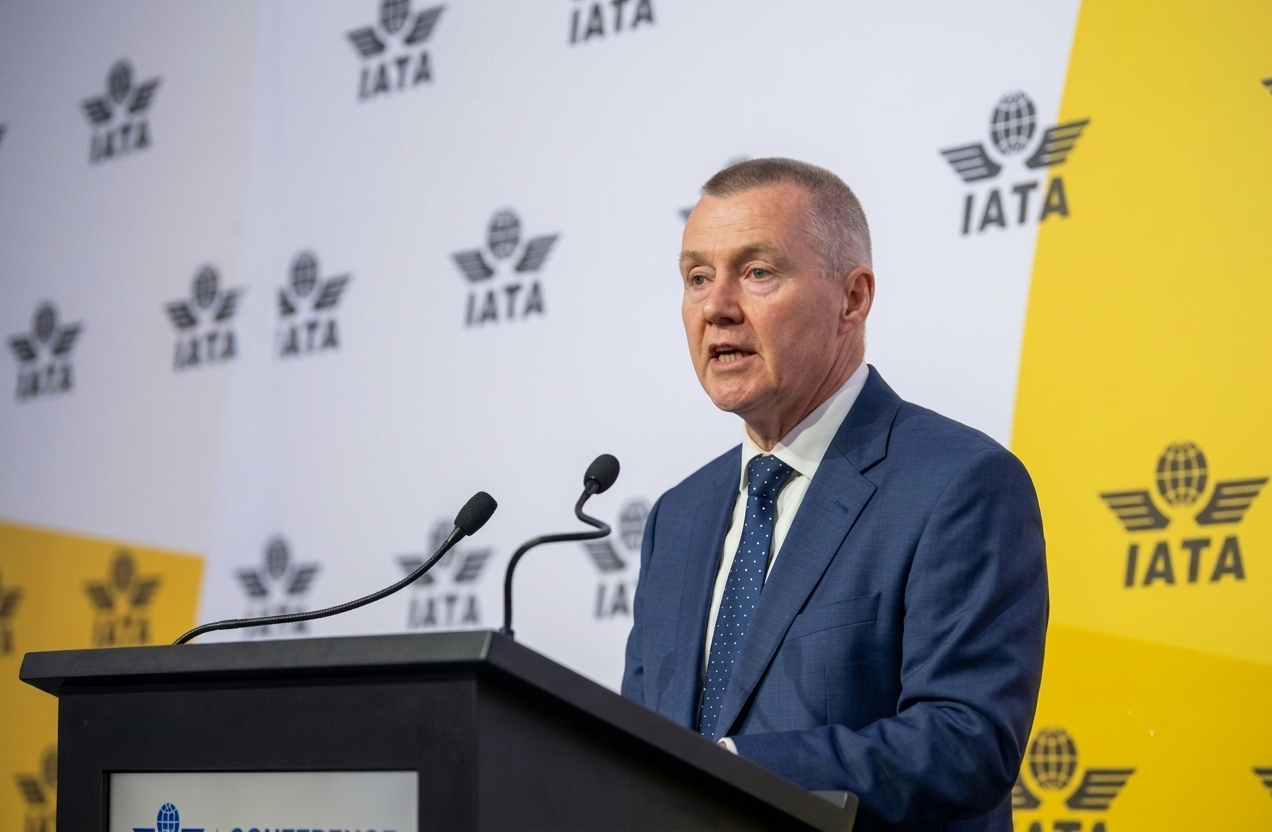
Addressing airline executives and industry leaders at the International Air Transport Association (IATA) 82nd Annual General Meeting in Rio de Janeiro, Director General Willie Walsh delivered one of his starkest assessments yet of the challenges confronting global aviation.
“Once again, we meet in challenging and unpredictable times,” Walsh told delegates, citing wars, supply chain disruptions and shifting global trade dynamics as major pressures on airlines worldwide.
The industry’s financial outlook has deteriorated significantly since last year. According to Walsh, global airline net profits are expected to fall from $45 billion in 2025 to $23 billion in 2026, while net profit margins are projected to decline from 4.2 percent to just 2.0 percent.
“It is a tough year for all airlines, especially those whose balance sheets had not yet recovered from COVID,” he said.
Fuel Shock Threatens Recovery
At the heart of the industry’s concerns is a dramatic rise in fuel costs following renewed conflict in the Middle East.
Walsh said average jet fuel prices are expected to be 70 percent higher year on year, adding approximately $100 billion to airlines’ collective fuel bill.
Despite the surge in operating costs, passenger demand remains relatively resilient. Travelers continue to book flights even as airlines increase fares to offset higher expenses.
“Our polling suggests that 86 percent of travelers expect fares to track oil prices,” Walsh noted. “That bodes well for a strong northern summer peak season.”
Yet he warned that the sustainability of this demand remains uncertain as consumers and businesses absorb the growing cost of air connectivity.
“The big unknown is how long travelers and shippers can tolerate the higher costs of connectivity.”
Passenger traffic growth is forecast at just 2.1 percent in 2026, while cargo growth is expected to slow to 0.7 percent.
Supply Chain Failures Reach Breaking Point
While fuel prices have created a new challenge, Walsh reserved some of his strongest criticism for aircraft and engine manufacturers.
The aviation industry’s supply chain crisis has now entered its fourth year, leaving airlines unable to modernize fleets and improve fuel efficiency as planned.
Global aircraft order backlogs have exceeded 18,000 aircraft, while the average age of the world’s airline fleet has reached a record 15.2 years.
Airlines are currently short more than 5,000 fuel efficient replacement aircraft that were expected to be in service.
According to Walsh, these failures cost airlines at least $11 billion in 2025 through higher maintenance expenses, leasing costs and lost efficiency gains.
In one of the most pointed moments of his speech, Walsh accused engine manufacturers of profiting while airlines bear the consequences of product and delivery shortcomings.
“My message to the engine OEMs is simple,” he declared. “Stop gouging us and get back to making great engines that work and that last.”
He added that allowing these failures to continue into the next decade would be “totally unacceptable.”
The comments reflect growing frustration among airline executives who argue that manufacturers have failed to restore production schedules despite record demand for aircraft.
Regulatory Battles Intensify
Walsh also used the platform to challenge governments and regulators, arguing that poorly designed policies are undermining aviation’s economic contribution.
He strongly criticized proposals in Brazil to impose a 26.5 percent value-added tax on airline tickets, warning that such measures would reduce travel demand and damage economic growth.
“Flying is not a luxury; it is an essential service and an economic catalyst that grows the tax base,” he said.
Another target was Europe’s controversial EU261 passenger compensation regime, which Walsh described as a model of regulatory failure.
Calling it the “poster child of bad regulation,” he argued that compensation rules often penalize airlines for disruptions outside their control while doing little to improve operational performance.
“EU261 is not fixing delays or cancellations,” Walsh said.
Instead, he pointed to air traffic management failures and infrastructure constraints as the primary causes of many disruptions affecting passengers.
Infrastructure Deficit Holds Back Growth
The aviation industry continues to face severe infrastructure bottlenecks, particularly at major airports and within air traffic management systems.
Nearly 400 airports worldwide now require slot coordination because demand exceeds available capacity.
Walsh highlighted several examples of governments investing successfully in future growth, including major airport developments in Vietnam, Singapore and Australia.
However, he warned that many countries remain constrained by outdated infrastructure, political indecision and inefficient regulatory frameworks.
Particular criticism was directed at London’s Heathrow Airport, where expansion plans remain controversial.
“The only motivator for Heathrow’s shareholders and management is its own enrichment,” Walsh argued, calling for stronger economic regulation and more effective competition.
He also criticized the slow pace of air traffic management modernization in Europe and the United States, arguing that modest efficiency improvements could generate billions of dollars in annual savings while significantly reducing emissions.
“Even a very modest 5 percent efficiency improvement could save airlines $12.5 billion annually and cut millions of tonnes of carbon.”
Climate Goals Under Pressure
Perhaps the most sobering section of Walsh’s address focused on aviation’s decarbonization ambitions.
Five years after airlines committed to achieving net zero carbon emissions by 2050, Walsh warned that key pillars of the industry’s climate strategy are showing signs of strain.
He expressed concern that CORSIA, the global carbon offsetting framework established through the International Civil Aviation Organization, is being undermined by inconsistent government implementation.
Only ten countries have so far made eligible emissions credits available for airlines, leaving a significant shortfall in supply.
More concerning, however, is the slow development of sustainable aviation fuel (SAF), widely viewed as the industry’s most important decarbonization tool.
This year, global SAF production is expected to reach just 2.4 million tonnes, enough to meet only 0.8 percent of airline fuel demand.
That figure remains dramatically below the industry’s long-term requirement of approximately 500 million tonnes annually by 2050.
“The gap is wide and not closing fast enough,” Walsh warned.
He criticized governments that have imposed SAF mandates without first ensuring sufficient fuel production capacity, arguing that the result has been higher costs without meaningful increases in supply.
“You could not make this stuff up,” he said, describing compliance mechanisms that shift billions of dollars in costs onto airlines.
In one of his bluntest assessments, Walsh acknowledged that current progress is insufficient to meet interim climate targets.
“To be blunt, there is no path to meet that outcome,” he said, referring to a global goal of achieving a 5 percent emissions reduction through SAF by 2030.
While he maintained that the aviation sector remains committed to decarbonization, Walsh called for a realistic reassessment of timelines and responsibilities across the aviation value chain.
A Final Warning and Farewell
The speech also marked the beginning of Walsh’s departure from IATA. In a few weeks, he will leave the association to become Chief Executive Officer of IndiGo Airlines, one of the world’s fastest-growing carriers.
Despite his warnings, Walsh concluded on a note of optimism, pointing to artificial intelligence, technological innovation and aviation’s enduring role in connecting people and economies.
“Aviation makes the world a better place by bringing people together,” he said.
Yet his farewell message carried a clear warning.
The airline industry’s resilience remains strong, but resilience alone cannot compensate for policy failures, infrastructure bottlenecks, manufacturing shortcomings and delayed climate action.
As airlines enter 2026 facing shrinking profits and mounting costs, Walsh’s final address to the industry’s global leadership served as both a diagnosis of aviation’s most pressing challenges and a call for governments, manufacturers and fuel suppliers to share responsibility for securing its future.