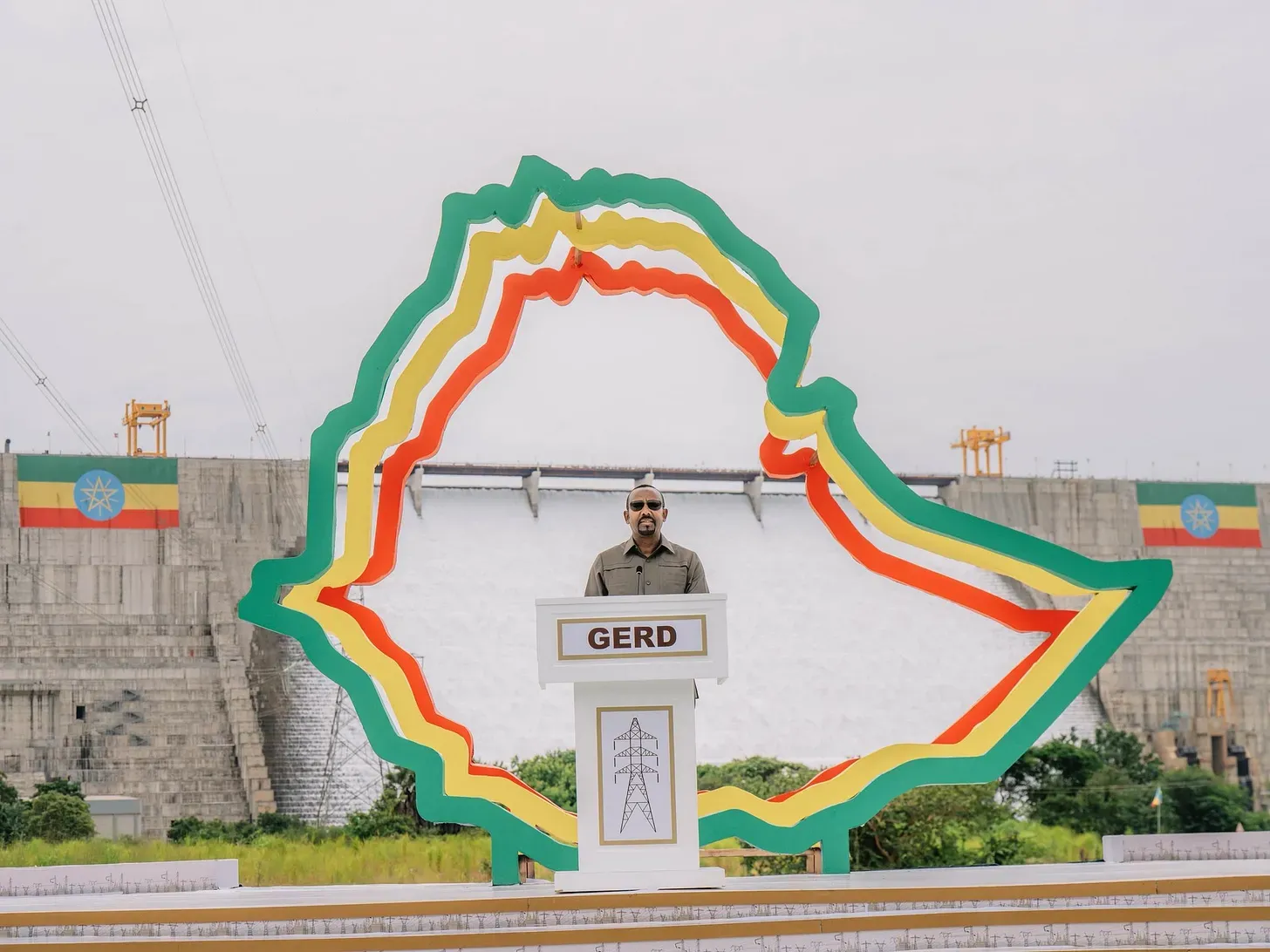
ADDIS ABABA/WASHINGTON — When Prime Minister Abiy Ahmed stood before Ethiopia’s House of People’s Representatives this week, his message was blunt and political. “Ethiopia has not received a single birr of aid or loan for the construction of the Grand Ethiopian Renaissance Dam,” he said while responding to lawmakers on the government’s mid-year performance. “It is a project made possible by the determination of brave Ethiopians at home and abroad.”
It was more than a budget clarification. It was a rebuttal to a narrative revived in Washington.
Trump’s Claim: “We Paid for That Dam”
US President Donald Trump has repeatedly claimed that the United States financed the GERD — Africa’s largest hydroelectric project and the centrepiece of Ethiopia’s development ambitions. In several speeches and social media posts, Trump said the dam was “financed by the United States of America,” questioning why Washington would support a project that Egypt sees as a strategic threat to Nile water security.
“We paid for that dam,” Trump said at a political event in the US. In another remark, he argued that the US had “stupidly financed” GERD and put Egypt in a difficult position. The claim has surfaced at least half a dozen times in recent months as Trump revisits foreign policy disputes from his presidency.
Addis Ababa says the statements are simply false. Officials framed GERD as a national project of sovereignty rather than a donor-driven infrastructure scheme.
Abiy reinforced that narrative in parliament. “It was built by Ethiopians with determination,” he said. “Not only have we completed GERD, but we are also building the third largest dam in Africa, Koisha, and work on major national projects has not stopped.”
Why Trump Keeps Saying It
Trump’s remarks are less about accounting and more about geopolitics.
By claiming US financing, Trump reframes GERD as a Western-enabled project rather than an Ethiopian one. It suggests Washington bears responsibility for downstream risks and positions him as someone correcting a strategic mistake made by previous administrations.
The narrative also serves a domestic political purpose — recasting US foreign aid as a series of costly errors that benefited rivals at America’s expense.
Fact Versus Narrative
On the facts, available evidence supports Abiy’s position. GERD was financed through domestic resources, bonds, and public contributions — not US loans or grants. Ethiopia launched a national bond programme and mobilised diaspora contributions specifically to fund the project without foreign dependency.
On politics, Trump’s statements serve a different purpose. They recast GERD into a US foreign policy mistake story tied to Egypt, leverage, and regional security — a narrative with little grounding in the project’s actual financing history.
Two Narratives, One Dam
In Addis Ababa, the answer is simple. As Abiy put it: “It is a project made possible by Ethiopians, at home and abroad.”
In Washington, Trump tells a different story — one less about turbines and bonds, and more about who gets to claim ownership over the Nile’s future.
Between those two narratives lies the real contest. Not over concrete and steel, but over power, sovereignty, and the politics of Africa’s largest dam. As the exchange between the two leaders sharpens, the world is watching how Ethiopia navigates one of the most consequential infrastructure and geopolitical disputes on the continent.